
Why Horticulture Matters: Health, Climate, Culture and the Future of Gardens
Horticulture plays a far wider role in society than simple decoration. It contributes to health and wellbeing, environmental resilience, cultural identity and economic value, while also offering practical ways to respond to climate change and ecological decline.
At a time when modern life has become increasingly urbanised and disconnected from nature, horticulture has the potential to counterbalance many of the negative impacts of contemporary living — from stress and poor health to biodiversity loss and environmental degradation.
The benefits of horticulture extend far beyond aesthetics. This article brings together horticultural science, ecological thinking and real-world garden practice. It reflects both academic research and on-the-ground experience managing gardens in Cornwall, where climate, soil and exposure increasingly shape how landscapes must be designed and maintained.

As wild landscapes continue to decline globally, human-managed spaces increasingly play a role in preserving biodiversity and cultural heritage simultaneously. Gardens, parks and managed landscapes now support significant proportions of native wildlife populations, providing habitats that would otherwise be absent from developed areas.
Understanding this relationship between people, place and planting allows gardens to be managed in a way that respects local character while still adapting to contemporary needs. This sensitivity to context is central to ecologically informed garden management, particularly in landscapes shaped by coast, exposure and historic land use.
Throughout human history, plants have been central to culture, identity and sense of place. Landscapes shaped by horticulture reflect local climate, soils, traditions and patterns of use, forming what is often referred to as the genius loci — the spirit of place.
Plants carry cultural symbolism, from national emblems and ceremonial uses to the defining character of regional landscapes. Historic gardens and designed landscapes illustrate how cultural values, craftsmanship and horticultural knowledge combine to create enduring environments that continue to shape identity long after their creation.
Culture, Identity and Sense of Place

Figure 2 Lotus (Nelumbo nucifera), the national flower of India.
Health, Wellbeing and Human Connection to Nature
A growing body of evidence shows that exposure to green spaces — whether wild or horticulturally managed — plays a vital role in supporting human health and wellbeing. The biophilia hypothesis suggests that humans have an inherent need to connect with nature, and that this connection is fundamental to effective cognitive function, emotional regulation and physical health.
Time spent in green environments has been shown to reduce stress, lower adrenaline levels and support mental restoration. Stress is closely linked to both mental fatigue and physiological illness, meaning that access to well-managed green space can contribute to improved long-term health outcomes.

Gardens and planted landscapes also encourage gentle, sustained physical activity and social interaction, both of which are associated with reduced risk of chronic disease. In residential, commercial and communal settings, green spaces can act as places of calm, reflection and connection, helping to counterbalance the pressures of modern life.
For children, access to nature has been linked to improved concentration, self-discipline and cognitive development. Nature-based environments encourage exploration and discovery, fostering confidence, creativity and a sense of belonging. This belief underpins the wider work of Juniper Gardens, a professional gardener in Cornwall, where careful horticulture is seen not simply as maintenance, but as long-term stewardship of living landscapes.
Aesthetics, Evolution and Why Gardens Move Us
The visual appeal of horticultural landscapes extends beyond colour and form, touching deeper psychological and evolutionary responses. Plants are widely perceived as attractive through combinations of symmetry, texture, fragrance, movement and seasonal change, while green itself is widely recognised as the most psychologically restful colour.
Theories of landscape aesthetics suggest that human preferences for certain garden forms are rooted in evolutionary history. Open parkland, scattered trees and layered planting are thought to reflect environments that once offered early humans both prospect and refuge. Likewise, the appeal of straight lines, clipped hedges and order can be traced to the emergence of agriculture and human control over the landscape.
The late landscape architect Sir Geoffrey Jellicoe argued that successful landscapes resonate with the collective subconscious, drawing on these deep-rooted associations rather than relying solely on surface decoration. This helps explain why gardens that balance structure with informality often feel intuitively “right”, even if they depart from rigid design rules.
Naturalistic planting styles, often perceived as untidy or informal, can gain aesthetic value when their ecological function is understood. Meadows, seed heads, decaying plant material and seasonal change contribute not only to biodiversity, but to a sense of authenticity and connection to natural processes.
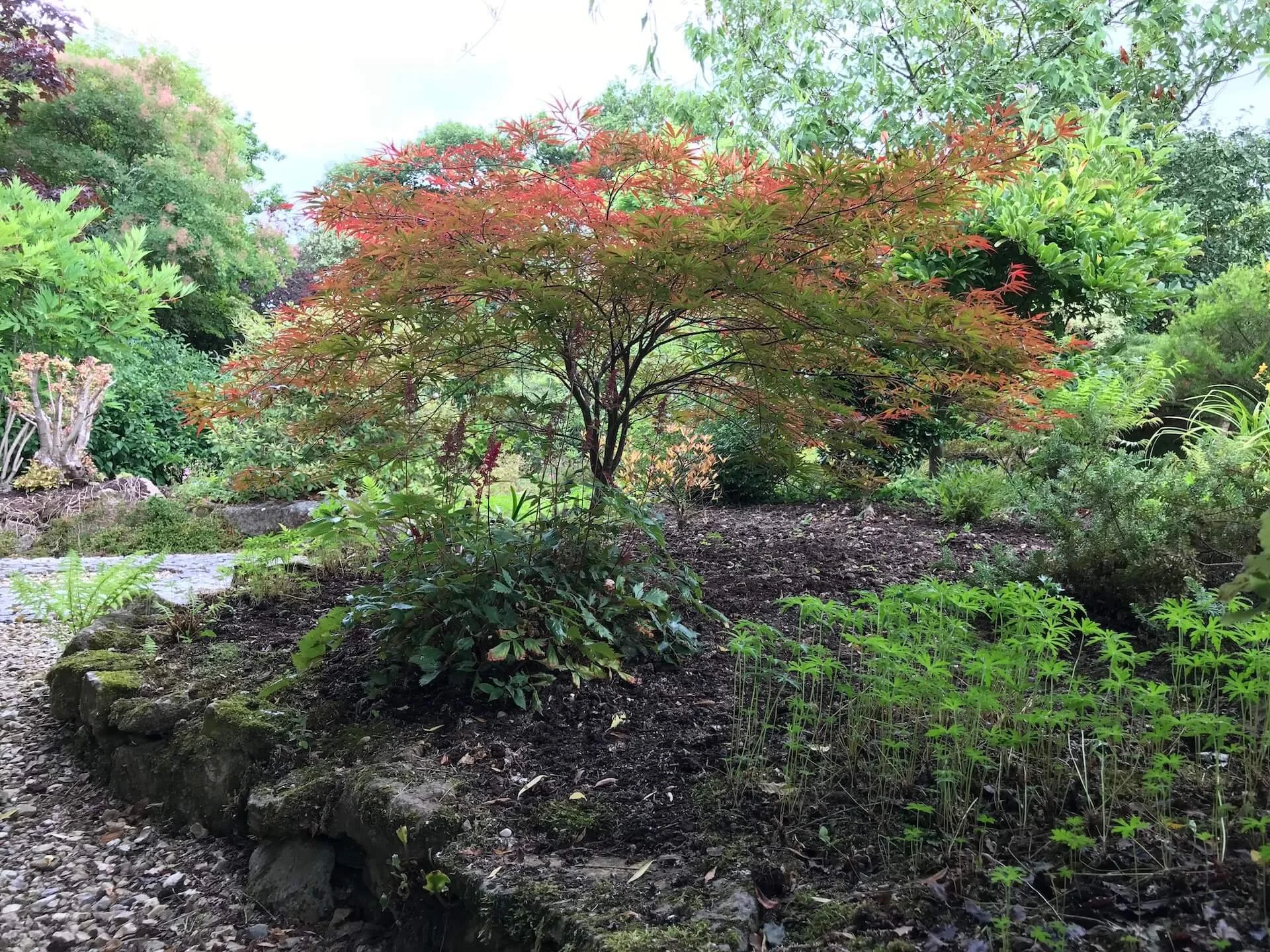
This perspective is closely aligned with the Japanese concept of wabi-sabi — an appreciation of imperfection, transience and the quiet collaboration between nature and human intention. In gardens, this philosophy recognises that beauty lies not in permanence or control, but in change, weathering and seasonal rhythm.
Understanding these deeper aesthetic principles allows gardens to be managed in a way that respects both ecological function and human perception, creating landscapes that feel grounded, meaningful and enduring rather than purely ornamental.
These benefits are particularly relevant in garden care for holiday homes and second homes, where outdoor space often plays a central role in how people relax, restore and reconnect when away from everyday routines.
Horticulture as Green Infrastructure
Horticulture plays an increasingly important role in modern landscapes by providing many of the ecosystem services that have been lost through urbanisation and land-use change. These services include climate regulation, soil formation, water management, air quality improvement and opportunities for recreation and wellbeing.
Well-designed planting and green infrastructure can moderate temperatures in both summer and winter through shading, evapotranspiration and the reduction of wind movement. In urban and built environments, this can significantly reduce heat stress while also improving comfort and usability of outdoor spaces.
Vegetation also plays a crucial role in water management. Through interception, infiltration and improved soil structure, planted landscapes help to slow surface water run-off, attenuate storm and flood waters, and reduce the movement of pollutants into watercourses. When combined with permeable surfaces and sustainable drainage approaches, horticultural landscapes can support groundwater recharge and reduce pressure on drainage systems.
At a garden scale, these principles translate into healthier soils, improved water retention and more resilient planting — outcomes that underpin long-term garden performance and reduce maintenance inputs. These ideas form the basis of my ecological and wildlife gardening in Cornwall, where planting, soil care and maintenance are approached as part of a functioning ecosystem rather than isolated tasks.
Gardens collectively represent one of the largest areas of managed green space in the UK, and as such play a crucial role in supporting biodiversity. Even relatively small gardens can provide valuable habitats when planting, soil management and maintenance practices are considered carefully.
Features such as ponds, native and nectar-rich planting, structural shrubs, long grass areas and log piles support a wide range of species, including pollinators, birds, amphibians and invertebrates. These organisms, in turn, contribute to soil health, nutrient cycling and overall ecosystem function.
Gardens, Biodiversity and Habitat Creation
Gardens also play an important role in plant conservation. Many species now exist primarily in cultivation, while seed banks and specialist collections act as genetic reservoirs that may support future restoration efforts. The continued development of new horticultural varieties further contributes to diversity within cultivated landscapes.
Managing gardens with biodiversity in mind does not require sacrificing visual quality. On the contrary, understanding the ecological function of planting often enhances aesthetic value by creating layered, dynamic and seasonally rich landscapes — a principle that sits at the heart of gardening with biodiversity in mind.

High-quality green space contributes directly to economic value at both local and national scales. Well-maintained landscapes have been shown to positively influence property values, attract investment and improve the desirability of residential and commercial environments.
At a wider level, horticultural destinations such as botanic gardens and visitor attractions demonstrate clear demand for well-designed and well-managed green spaces. These landscapes support tourism, employment and regional economies, highlighting horticulture as a financially relevant sector as well as an environmental one.
Economic Value of Horticulture and Green Space
Green infrastructure can also reduce operational costs. Research has shown that planted environments can lower cooling requirements in built-up areas by reducing ambient temperatures and providing shading. Even conservative reductions in energy demand can translate into significant long-term savings.
For commercial sites, managed estates and shared spaces, investment in planting and ongoing care is therefore not simply an aesthetic choice, but a practical decision that supports asset value, usability and long-term efficiency. This approach underpins my work in commercial garden management in Cornwall, where long-term performance, presentation and sustainability must work together.

Photo by Kirstin Prisk
Closing: Bringing Ecology, Aesthetics and Practice Together
When horticulture is approached as a living system — shaped by ecology, culture, health and human perception — gardens become far more than decorative spaces. They become places that support wellbeing, express local identity and function as resilient, working landscapes.
Whether through ecological and wildlife gardening in Cornwall, long-term commercial garden management, or thoughtful care of holiday home gardens, the aim is the same: to create landscapes that feel right, work hard, and improve with time. In doing so, horticulture fulfils one of its most important roles — helping people reconnect with the natural world in ways that are practical, meaningful and enduring.
Written by Jodi Dickinson MHort(RHS) – professional gardener and garden manager specialising in ecological, commercial and coastal gardens in Cornwall.
Further reading
https://www.nationalgeographic.com/science/2018/08/italy-olive-trees-dying-xylella/
https://www.gov.uk/government/statistics/latest-horticulture-statistics
http://www.fao.org/agriculture/crops/thematic-sitemap/theme/biodiversity0
https://www.iucnredlist.org/species/51247690/58396933
https://plantnetwork.org/meetings/training-days-visits/assessing-developing-spirit-place-document-garden/
https://www.rhs.org.uk/science/pdf/climate-and-sustainability/urban-greening/gardening-matters-urban-greening.pdf
https://www.rspb.org.uk/birds-and-wildlife/advice/gardening-for-wildlife/creating-a-wildlife-friendly-garden/