
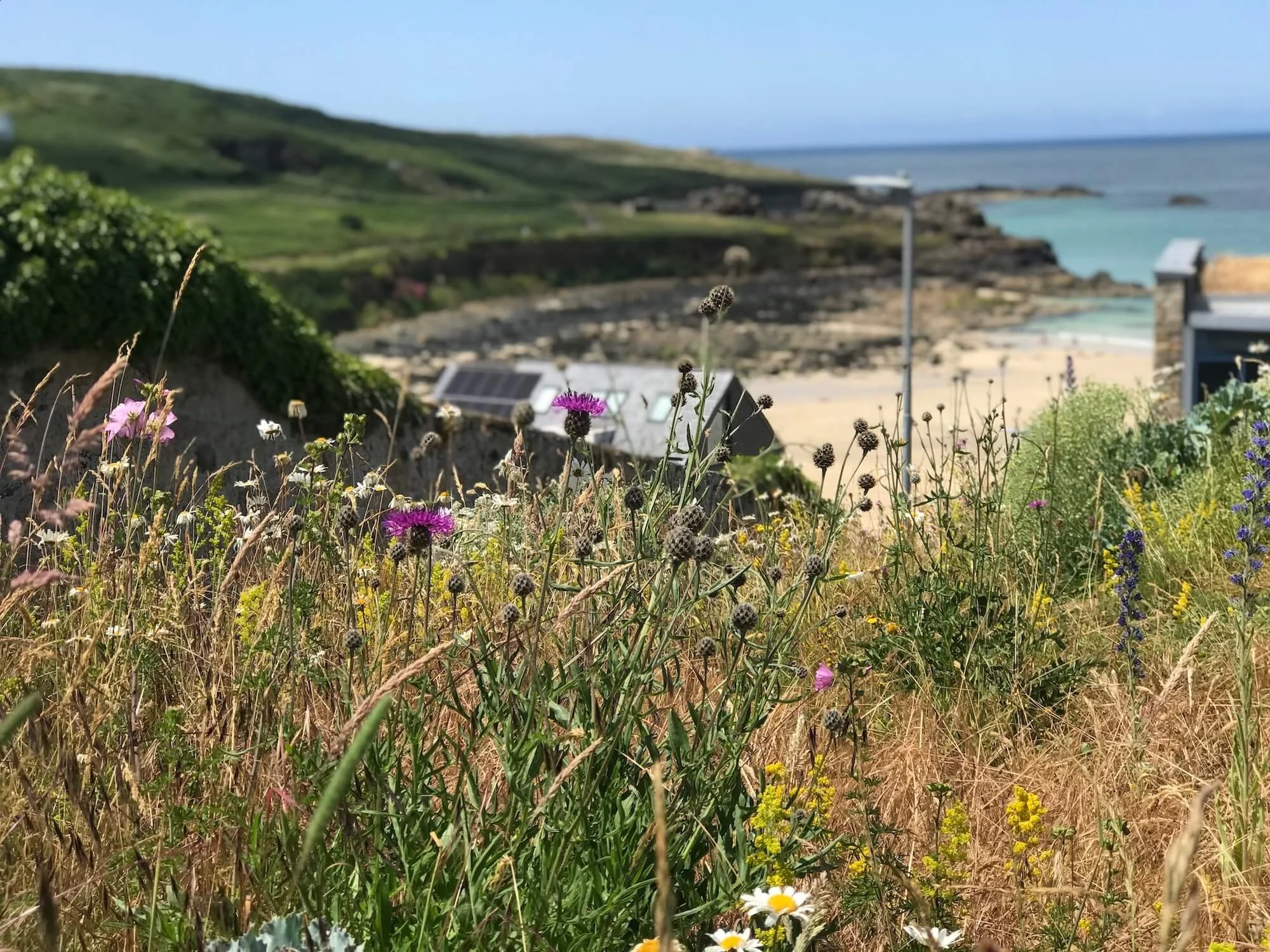
Tate St Ives Roof Garden – A Coastal Wildflower Landscape in Cornwall
Supporting Wildlife and Local Biodiversity on the Cornish Coast
On the north Cornish coastline in St Ives, Tate St Ives opened its new extension in autumn 2017. On the roof sits a garden—though not a traditional one. This is a public coastal wildflower landscape, designed as a place to walk, sit, and experience a planted environment that reflects the surrounding Cornish coastline.
The building itself is clad in turquoise ceramic tiles designed by architect Jamie Fobert, referencing St Ives’ ceramic heritage and echoing the colours of sea and sky.
In 2017, working with landscape architect Andrew Rathbone, Juniper Gardens helped install and plant the Tate St Ives roof garden, and now manages its ongoing development and maintenance.Supporting wildlife and local biodiversity

A garden on the roof of a public gallery, perched high above the rooftops of St Ives with the Atlantic stretching out beyond, sits at a particularly interesting intersection of horticulture, culture, and place. Exposed to the full force of the coastal weather and quietly present above the life of the town below, spaces like this one — where plants and landscape come together in one of Cornwall's most distinctive settings — are among the most compelling examples of what gardens can offer beyond their immediate aesthetic value. I explore this broader potential in my article on how Cornwall's gardens can become pillars of community in a changing climate,which draws on the kind of thinking that projects like the Tate roof garden embody.

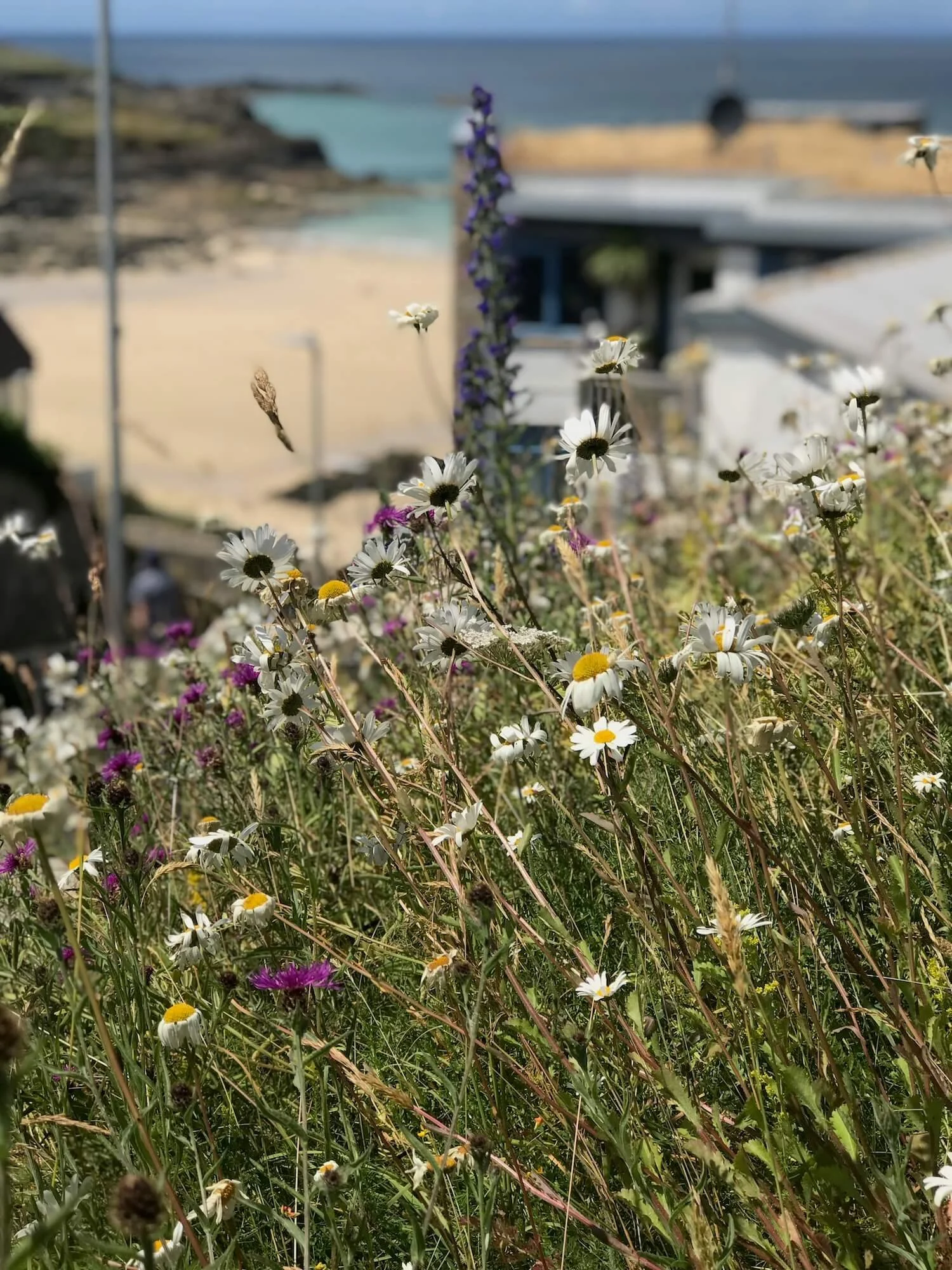
The Tate St Ives roof garden is designed as a coastal wildflower meadow, seeded with a specialist mix of native perennial species including oxeye daisy (Leucanthemum vulgare), musk mallow (Malva moschata), and a range of grasses to provide seasonal flowering structure from spring through summer.
Coastal wildflower gardening in Cornwall
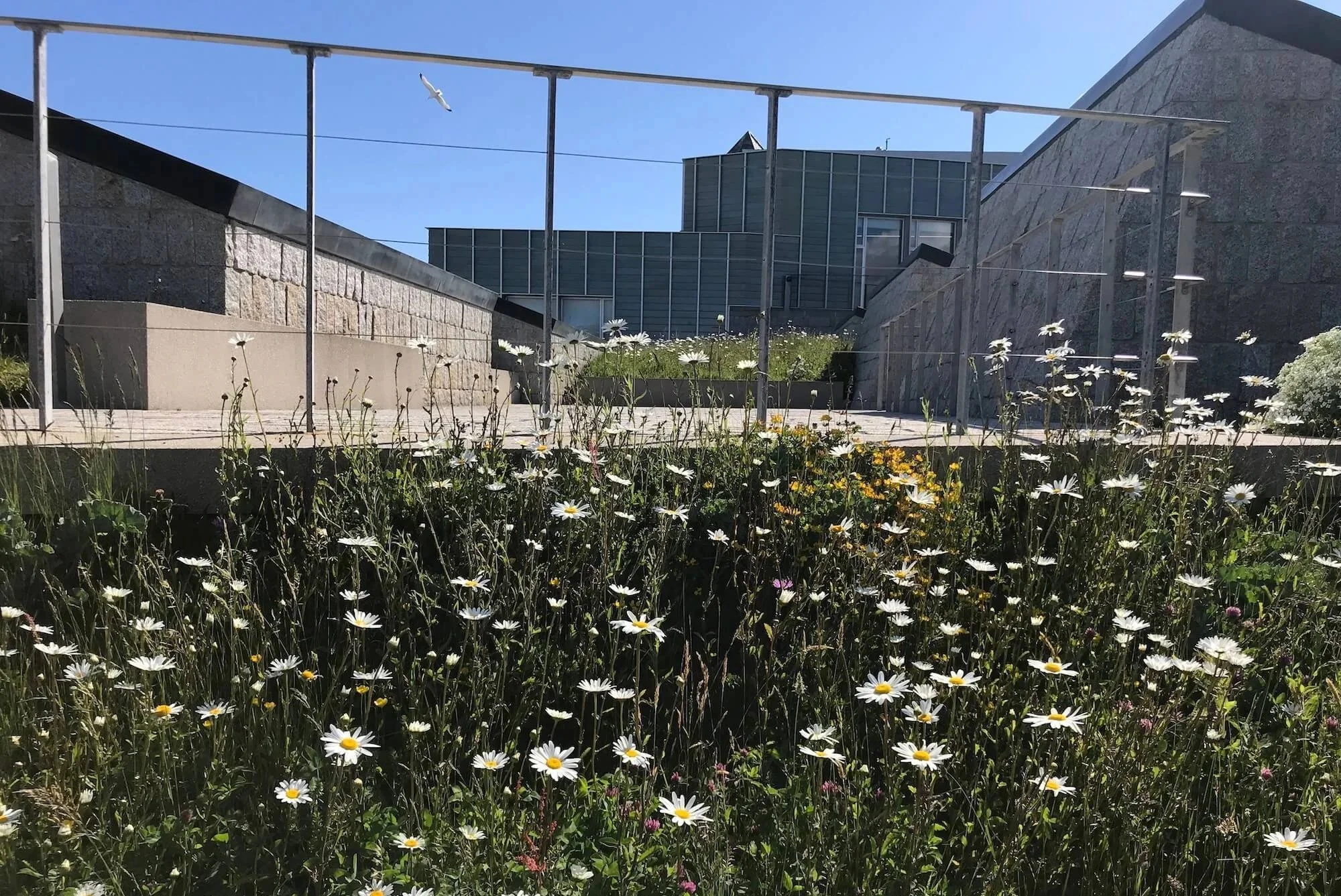
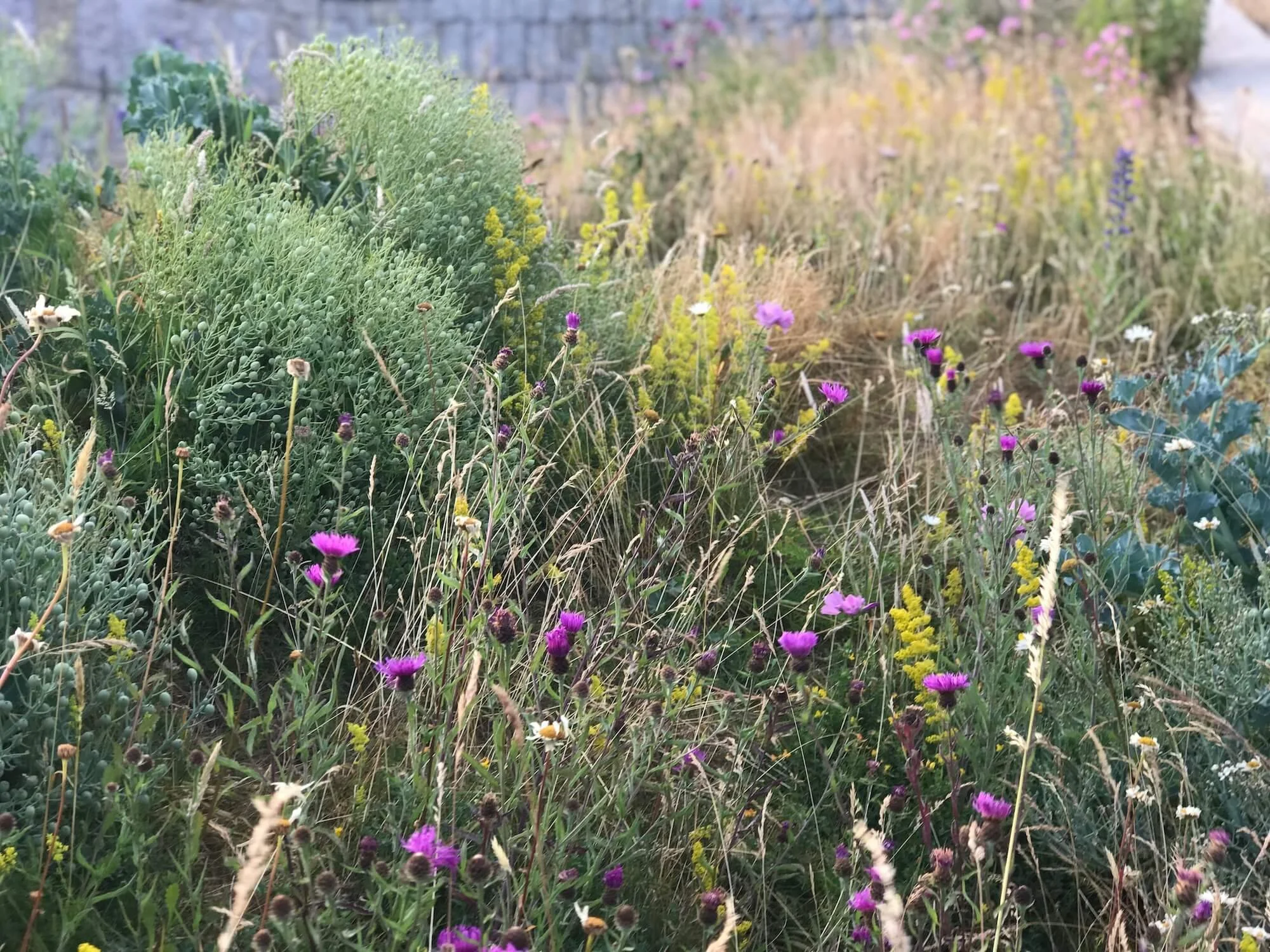
To reflect the surrounding maritime environment, the meadow is interplanted with native coastal species such as sea thrift (Armeria maritima), sea campion (Silene vulgaris maritima), and sea kale (Crambe maritima). The blue-green foliage of sea kale visually links the planting to the ceramic façade and the Atlantic beyond.
The growing medium is specially engineered for roof gardens: lightweight, free draining, and low in nutrients. A key component is LECA (Light Expanded Clay Aggregate), which supports drainage and structural weight limits while creating conditions suitable for coastal species.
This approach draws on principles used across my work in ecological and wildlife gardening in Cornwall, where planting is tailored to site conditions, exposure, and soil type.
The plant selection for the roof garden is guided by exactly the principles I apply across my work with Cornish gardens more broadly — choosing species with genuine plasticity, suited to the specific microclimate and conditions of the site, and prioritising ecological function alongside visual impact. The exposed, free-draining, low-nutrient rooftop environment is an extreme version of conditions found in many Cornish coastal gardens, and the species that thrive here offer useful lessons for gardens elsewhere on the coast. I explore the broader principles of coastal plant selection in my article on how to choose plants that will thrive in a Cornish garden in the coming decades, and the specific qualities that make native coastal species so well suited to challenging Cornish conditions in my article on signature plants of Cornwall.
Biodiversity, Structure and Layering
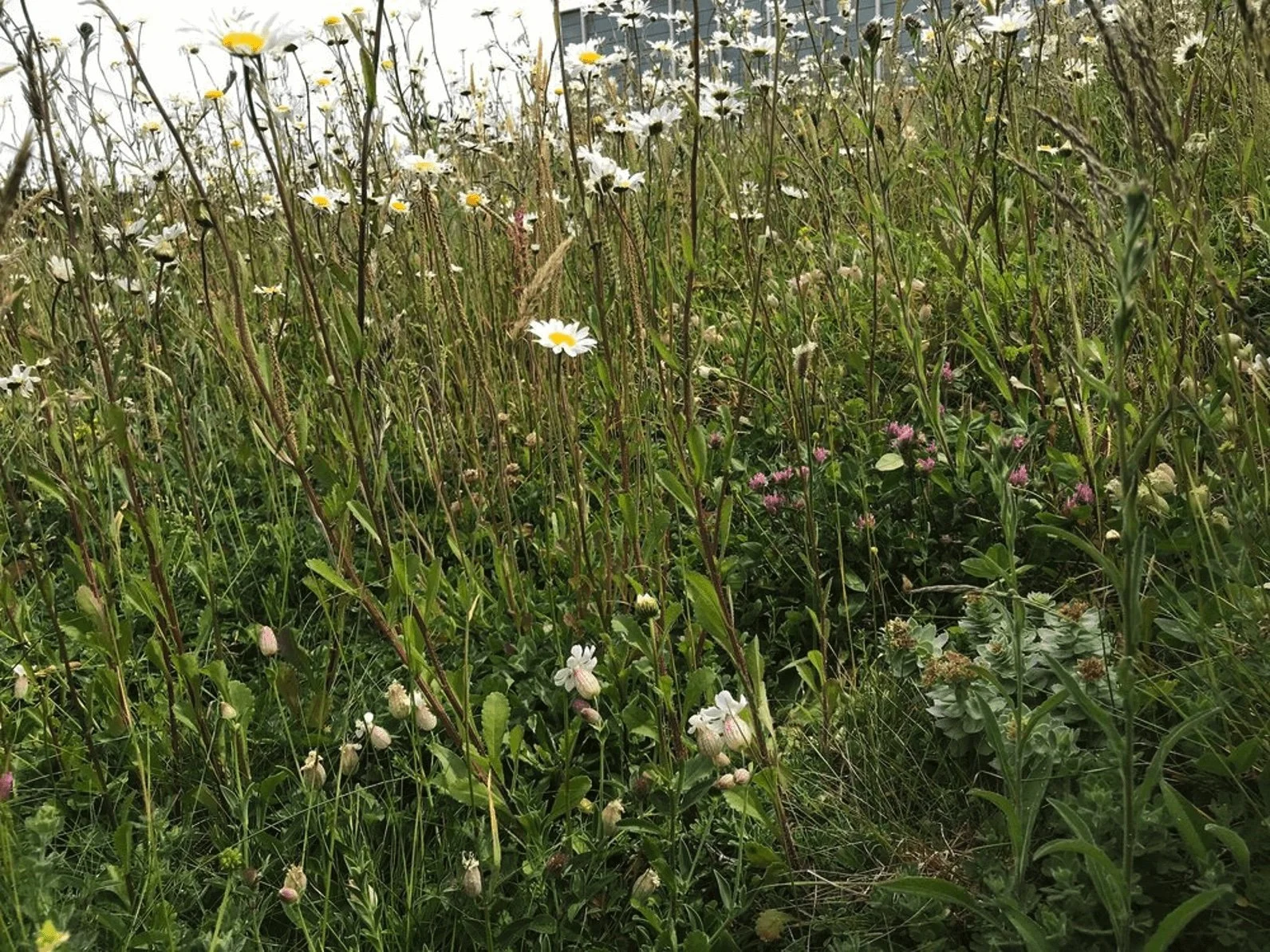
Species diversity in the roof garden is expressed not only through seasonal flowering, but also through vertical layering, with different plants occupying distinct ecological niches. This layered garden structure and planting design mirrors natural ecosystems and supports a wider range of insects and wildlife.
Oxeye daisy forms the canopy layer, while species such as sea campion, red clover (Trifolium pratense), and roseroot (Rhodiola rosea) occupy the ground layer. This diversity increases ecological resilience and creates a dynamic, evolving landscape throughout the year.
The experience of working within such a culturally significant landscape continues to shape the wider philosophy of Juniper Gardens, a professional gardener in Cornwall, where ecology, structure and long-term stewardship are considered together.
The layered structure of the roof garden — canopy species, mid-level plants, ground cover — reflects the ecological planting principles I discuss in depth in my article on building a resilient Cornish garden: the case for ecological planting. In a rooftop environment where soil depth is limited, weight constraints are real, and wind exposure is constant, structural diversity is not merely an aesthetic choice but a practical survival strategy for the plant community. The roof garden is in many ways a concentrated demonstration of what ecological resilience looks like in one of Cornwall's most challenging growing environments.

Wildflower meadows are typically cut two to three times per year to reduce grass dominance and increase species diversity. Cuttings are removed to keep soil fertility low, favouring wildflower species.
On the Tate St Ives roof garden, cutting regimes are adapted to weather conditions, particularly rainfall and drought. The exposed coastal rooftop environment naturally limits grass vigour, allowing the planting to evolve in response to climate pressures.
Managing a Coastal Roof Meadow
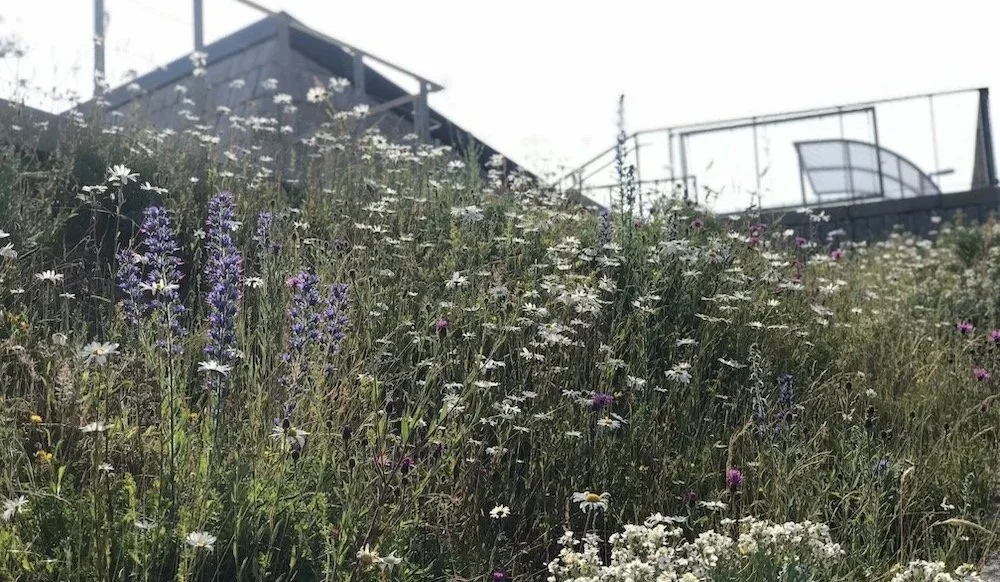
The aim is to allow a resilient plant community to establish—species naturally selected by local conditions such as hot, dry summers and high winds—while recognising that rooftop substrates differ fundamentally from natural cliff habitats. Ongoing monitoring is essential during extreme weather.
Projects such as the Tate St Ives roof garden demonstrate how specialist horticultural knowledge can be applied to complex public and institutional landscapes. This approach also informs my work in commercial gardening and grounds maintenance, where long-term plant health, resilience, and site-specific management are essential for professional landscapes.
Managing a coastal roof meadow through increasingly erratic weather — drier summers, more intense rainfall events, higher winds — requires close observation and a willingness to adapt management to conditions rather than applying a fixed seasonal programme. The changing climate is felt with particular intensity in an exposed rooftop environment, where there is no shelter to moderate extremes. I explore how climate change is already affecting Cornish gardens at ground level in my article on how climate change is already affecting Cornish gardens, and the water management strategies most relevant to free-draining, exposed sites in my article on water-smart gardening in Cornwall.
Public landscapes such as the Tate St Ives roof garden demonstrate how horticulture can shape cultural spaces, support biodiversity, and enhance human wellbeing in urban environments. These connections between people, plants, and place are explored further in my article on the benefits of horticulture. While you can also read my article on artistic garden design for further insight into how these projects have shaped my practice.
Horticulture, Culture and Wellbeing
The well-being dimension of this garden is worth dwelling on. Research consistently shows that exposure to naturalistic planting — the kind of informal, species-rich, seasonally changing landscape that the roof garden embodies — offers some of the highest restorative value of any outdoor environment. For the visitors who experience the Tate St Ives roof garden, many of them arriving in a spirit of cultural engagement with the gallery below, the planting above adds something that is genuinely good for them in ways that go beyond the visual. I explore the evidence for this in my article on well-designed outdoor spaces and human well-being: why Cornwall gets it right.

Achillea millefolium – yarrow
Armeria maritima - sea thrift
Aster tripolium - sea aster
Cochlearia officianallis - scurvy grass
Crambe maritma - sea kale
Daucus carota - wild carrot
Echium vulgare - viper’s bugloss
Leucanthemum vulgare -oxeye daisy
Lotus corniculatus - birdsfoot trefoil
Malva moschata - musk mallow
Rhodiola rosea - golden root
Rosa pimpinellifolia - burnet rose
Scilla verna - spring squill
Silene vulgaris maritima - sea campion
Trifolium pratense - wild red clover
Other plants you may find on the roof garden
Roof Garden at Tate St Ives – Questions & Answers
What makes the Tate St Ives roof garden different from a traditional garden?
The roof garden at Tate St Ives is designed as a coastal wildflower meadow rather than a formal ornamental space. It reflects the surrounding Cornish landscape, blending granite, native planting and open sky into a biodiverse public environment. It is a garden that feels natural, wind-shaped and rooted in place.
Who maintains the Tate St Ives roof meadow?
Juniper Gardens manages and maintains the roof meadow and associated green spaces. This involves specialist ecological care rather than conventional horticulture — understanding coastal conditions, soil depth constraints, wind exposure, and seasonal meadow management techniques.
What plants are used in a coastal roof meadow?
The planting palette is inspired by native and coastal-adapted species that thrive in exposed, low-nutrient environments. Wildflowers and grasses are selected to:
Support pollinators and biodiversity
Withstand salt-laden winds
Reflect the surrounding Cornish cliffs and headlands
Plant choice is guided by sustainability, resilience and ecological integrity.
Is maintaining a roof garden different from maintaining a ground-level garden?
Yes. Roof gardens require specialist knowledge. Factors such as:
Drainage systems
Soil depth limitations
Wind desiccation
Load-bearing constraints
must all be considered. Maintenance is lighter-touch and ecology-led, focused on seasonal meadow cycles rather than constant intervention.
Why are wildflower meadows important in Cornwall?
Wildflower meadows support declining pollinators and increase biodiversity. In coastal towns like St Ives, they help soften built environments and reconnect people with the natural character of the landscape.
Can Juniper Gardens manage other commercial or public green spaces?
Yes. Alongside specialist roof gardens, we provide professional commercial garden maintenance for galleries, cultural institutions, holiday properties and high-end sites across Cornwall. Our approach combines horticultural precision with ecological sensitivity and reliability.
How often is a wildflower roof meadow maintained?
Unlike formal gardens requiring weekly visits, meadow spaces are managed seasonally. This includes:
Selective weeding
Monitoring plant balance
Annual or biannual meadow cuts
Ongoing ecological observation
The aim is to guide the meadow rather than control it.