
Britain's Historic Gardens Are on the Front Line of Climate Change — and Most Are Not Ready
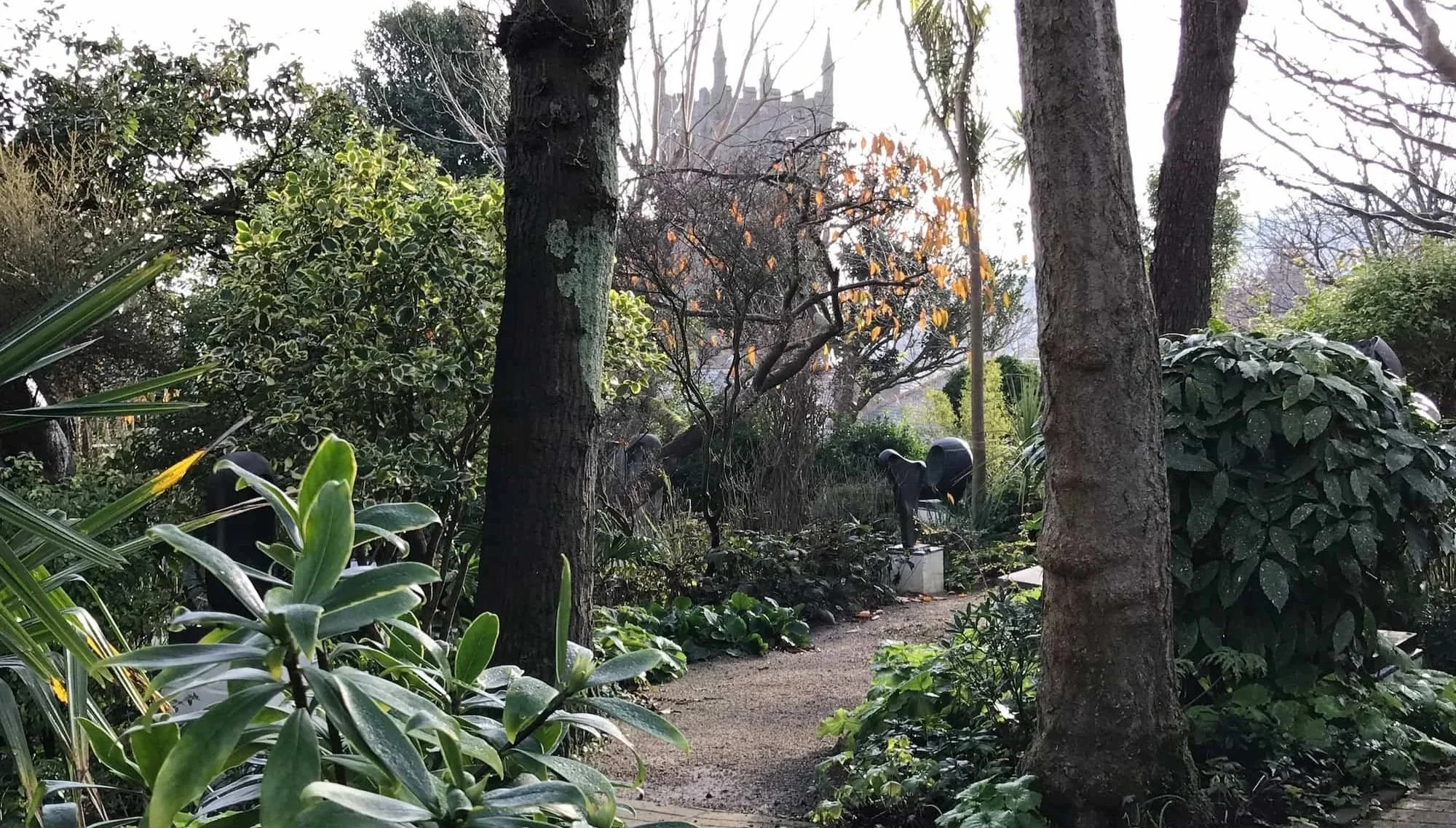
Britain's historic gardens represent one of the most extraordinary cultural inheritances in the world. Nowhere else on earth has so concentrated and so varied a collection of designed landscapes accumulated over so many centuries — from the formal gardens of the seventeenth century through the naturalistic landscape parks of the eighteenth, the great plant-hunting inspired collections of the nineteenth, and the more recent but no less significant gardens of the twentieth century. They are, collectively, a living record of the relationship between British culture and the natural world across four hundred years of change.
They are also, collectively, under a level of threat that the institutions responsible for them have not yet fully absorbed.
Climate change is not simply an additional management challenge to be addressed alongside the familiar pressures of funding, staffing, pest and disease management, and visitor management. It is a challenge that strikes at the biological foundations of these gardens — at the plants, the soils, the ecological relationships, and the long-accumulated horticultural knowledge on which they depend. And it does so in ways that interact with the specific characteristics of historic gardens — their age, their irreplaceability, their community significance, their cultural and artistic associations — in ways that make the required response both more urgent and more complex than for gardens without that weight of history.
The gap between the scale of this challenge and the current state of preparation in most British historic gardens is, I believe, one of the most significant and least discussed problems in British cultural heritage management. This article is an attempt to describe that gap honestly, to explain why it exists, and to outline what closing it would actually require.
What makes historic gardens uniquely vulnerable
Historic gardens face the challenges of climate change in ways that are qualitatively different from those facing contemporary or private gardens — not simply more intense versions of the same problems, but problems of a fundamentally different character.
The first is the age and irreplaceability of the living fabric. A mature tree that took two hundred years to reach its current form cannot be replaced. A rhododendron collection assembled over three generations from hand-collected seed of specific Himalayan provenance cannot be reconstituted from nursery stock. A plant known to have been placed by a specific individual of historical significance carries a cultural weight that no replacement, however botanically similar, can carry. When the living fabric of a historic garden is lost — whether to drought stress, disease, storm damage, or the gradual unsuitably of species to changing conditions — something genuinely irreplaceable is lost with it.
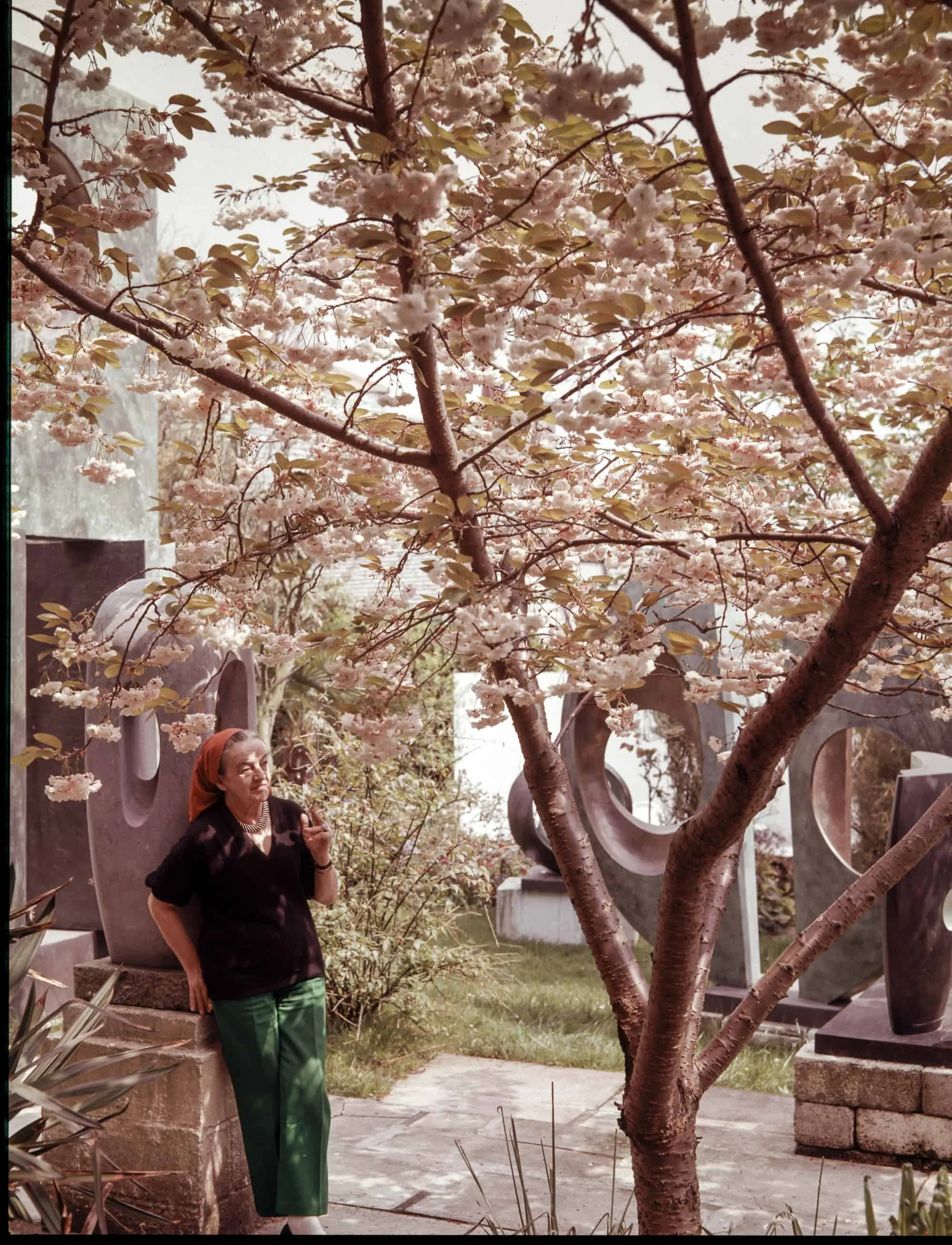
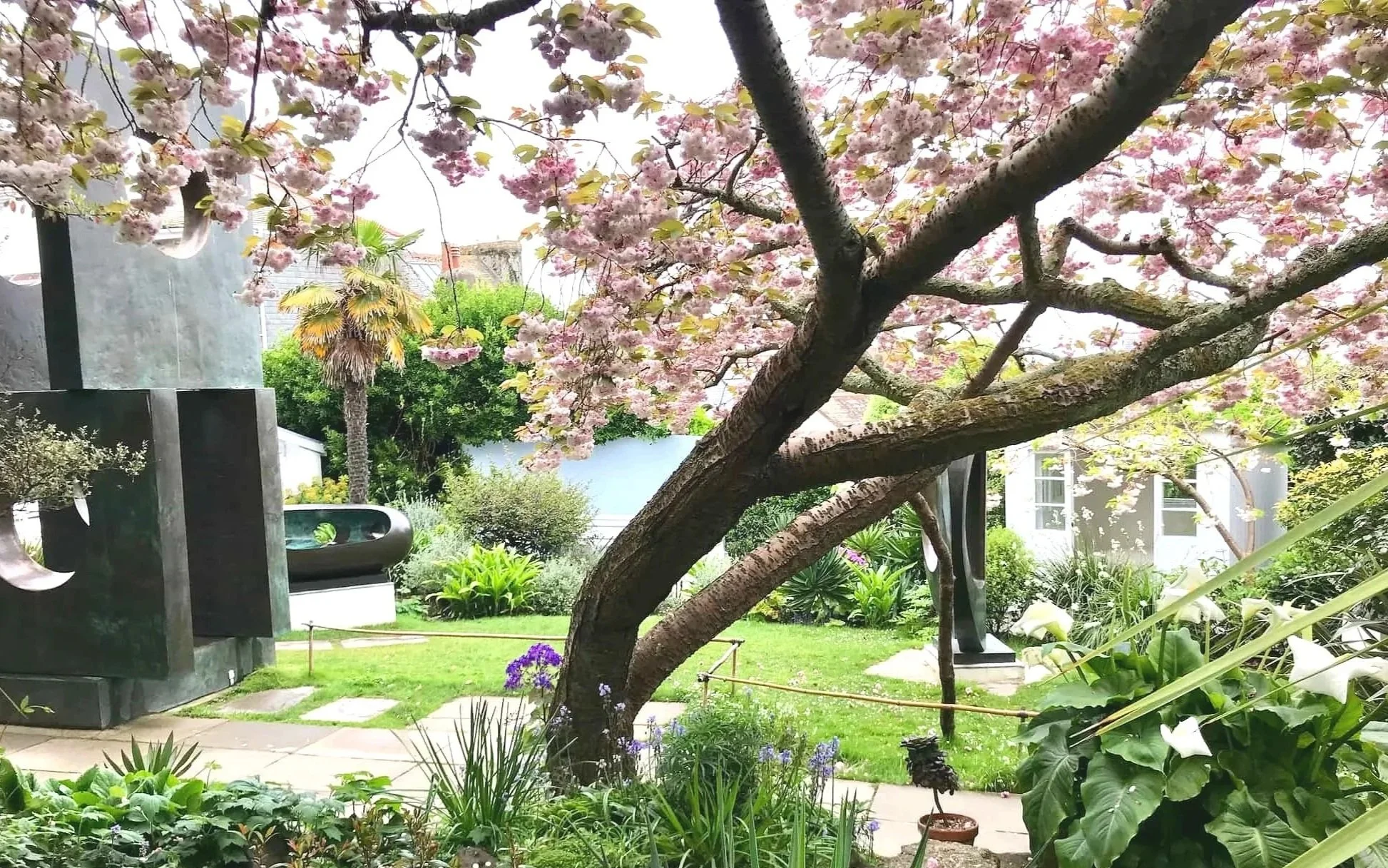
Image 1: Barbara Hepworth in her garden 1970 copyright Bowness. . Image 2: same cherry tree 2025
This irreplaceability creates a management imperative that contemporary gardens do not face in the same form. The manager of a contemporary garden who loses a significant planting to climate stress faces a horticultural and aesthetic challenge. The manager of a historic garden faces something closer to a conservation crisis — the loss of material that is part of the cultural heritage of the nation, that cannot be restored once it is gone, and that the institution responsible for it has a duty to future generations to protect.
The second distinctive vulnerability is the concentration of mature planting. Historic gardens typically contain a high proportion of large, mature trees and shrubs — plants that have been accumulating structure, ecological function, and cultural significance for decades or centuries. These mature specimens are both the most valuable elements of the garden's character and, in many cases, the most vulnerable to climate stress. Mature trees consume enormous quantities of water during warm conditions — a large specimen can use well over one hundred gallons per day — and are particularly susceptible to secondary pathogens when subjected to drought stress. They are also, by definition, irreplaceable on any timescale meaningful to current managers or their successors.
The third vulnerability is structural — the limited space for transitioning that mature historic gardens typically offer. A garden dominated by mature woodland canopy has little room to introduce new species while existing ones are in place. The natural process of gradual species turnover that allows more open landscapes to adapt relatively smoothly to changing conditions is simply not available in the same way. Adaptation, when it becomes necessary, must happen rapidly and in response to loss rather than in advance of it — unless managers plan well ahead of the point of crisis.
The preservation versus adaptation dilemma
At the heart of the historic garden climate challenge lies a genuine and difficult tension between two legitimate imperatives. Preservation — maintaining faithfully the living fabric and character of the garden as it was created and as it has developed — is central to the purpose of historic garden management. Adaptation — responding intelligently to conditions that are changing in ways the garden's creators could not have anticipated — is becoming increasingly necessary for the physical survival of that fabric.
These two imperatives are not always incompatible. Thoughtful adaptation, done with deep knowledge of the garden's character and history, can preserve the essential qualities of a historic garden while acknowledging that the conditions it inhabits have changed. But the tension between them is real, and it is not resolved by simply asserting that adaptation can be done sensitively. It requires a serious engagement with the question of what, precisely, is most worth preserving — and the courage to make difficult decisions when preservation of the whole is no longer possible and priorities must be set.
The approach I have developed through both research and practice, most directly in my work as head gardener at the Barbara Hepworth Museum and Sculpture Garden in St Ives, begins with the concept of signature species — those plants that most powerfully define the character and atmosphere of a specific place. These are the elements that, if lost, would most fundamentally change the experience and meaning of the garden. They deserve the maximum available resource for their preservation — improved irrigation, soil management, careful monitoring, and proactive pest and disease management — for as long as it remains feasible to maintain them.
For more functional planting — shelterbelts, ground cover, structural shrubs whose role is primarily spatial rather than historically specific — the calculus is different. Here, the case for transitioning to climate-adapted alternatives before failure occurs is stronger, because the loss of function is the primary concern rather than the loss of irreplaceable specimens. Replacing a failing shelterbelt with species better suited to the conditions of 2050 or 2070 preserves the function of the garden — its spatial structure, its microclimate management, its protection for more sensitive planting — while accepting a degree of change that is, in the long run, less damaging than allowing the shelterbelt to fail.
The species audit imperative
The most practically important step that the managers of historic gardens can take now — and the one that most are not yet taking systematically — is a rigorous species audit oriented towards future climate conditions.
The model provided by the Royal Botanic Gardens Victoria in Melbourne is instructive. Confronting the projected climate of 2090, the garden's management undertook a comprehensive assessment of their plant collections against future climate scenarios, identifying those species unlikely to be suited to the conditions of the future garden. This audit provided the framework for a deliberate, planned transition — removing unsuitable species in a managed and reasoned way, replacing them with climate-adapted alternatives chosen for their ability to maintain the essential functions and character of the garden, and doing so early enough that new plantings would have time to reach maturity before the species they were replacing finally failed.
The key insight is timing. A species audit conducted now, in gardens where the most significant impacts of climate change are still in their early stages, provides a window of opportunity that will not remain open indefinitely. Species identified as unsuitable for the future climate can be replaced in a planned way, with careful species selection and adequate time for new plantings to establish, while the garden's structure and character remain essentially intact. The same audit conducted after significant plant losses have already occurred is a much more constrained exercise — reactive rather than proactive, responding to gaps rather than preventing them.
For British historic gardens, many of which contain plant collections of great age and complexity, a species audit of this kind represents a significant undertaking. It requires both horticultural knowledge — understanding which species are genuinely vulnerable and which are more resilient than they might appear — and climate science literacy, the ability to interpret the available projections in ways that are meaningful at the scale of individual garden species. It also requires institutional courage: the willingness to acknowledge openly that some much-loved plants are unlikely to be part of the garden's long-term future, and to make that acknowledgement before crisis forces it.

Water: the most urgent practical challenge
Across the historic gardens of Britain, water management is emerging as the most immediately pressing practical dimension of climate change adaptation — and the one where the gap between current provision and future need is widest.
The combination of drier, hotter summers and more intense winter rainfall events creates a water management challenge of genuine complexity. Summer irrigation needs are increasing as drought stress affects plants that were previously managed without supplementary watering. The infrastructure for meeting those needs — harvesting, storage, and distribution systems capable of delivering water efficiently to where it is most needed — is absent or inadequate in most historic gardens. And the ethical and practical imperative to meet irrigation needs from harvested rainwater rather than mains supply — which carries a carbon footprint and draws from natural systems already under pressure — adds a further dimension to what is already a complex problem.
The prioritisation of water resources is itself a significant management question. In Melbourne, as noted above, the decision was made to prioritise scarce water for the garden's mature elm trees — recognising that their scale, their ecological function, their contribution to the garden's character, and their irreplaceability made them the highest priority for whatever water was available. Similar prioritisation decisions will face the managers of British historic gardens with increasing frequency as dry summers become more severe, and making those decisions well requires exactly the kind of prior clarity about what matters most that a rigorous Genius loci assessment provides.
The knowledge gap
One of the less visible but genuinely significant dimensions of the historic garden climate challenge is a knowledge gap — a shortage of the specific expertise required to navigate climate adaptation well in historic garden contexts.
This is partly a horticultural knowledge gap. The combination of plant science, ecological understanding, climate literacy, and deep site-specific knowledge required to make well-informed climate adaptation decisions in historic gardens is not widely distributed. It sits most densely with the small number of highly experienced head gardeners who have worked in significant gardens for long enough to have developed the breadth and depth of knowledge the task demands. These people are a scarce resource, their expertise is not being sufficiently captured and transmitted, and the pipeline of young horticulturists with the training and experience to replace them is not adequate to the need.
It is also partly a research gap. The academic literature on climate change adaptation in ornamental horticulture is growing but remains limited relative to the scale and urgency of the challenge. Research on the specific vulnerabilities of historically significant plant collections, on the performance of climate-adapted species as replacements for culturally important ones, and on the social and community dimensions of managing change in heritage landscapes is particularly sparse. Bridging the gap between the ecological and climate science literature and the practical needs of historic garden managers is a research priority that the horticultural academic community has not yet fully embraced.
What the next decade demands
The window for proactive, planned adaptation in Britain's historic gardens is open but not unlimited. The climate projections are clear about the direction of change. The signs of stress are already visible in gardens across the country. And the lead times involved in replacing mature structural planting — the years required for a young tree to reach the scale needed to fulfil the function of the one it replaces — mean that decisions deferred now will compound into much greater challenges later.
What the next decade demands from the institutions responsible for Britain's historic gardens is a combination of ambition and honesty — ambition about what thoughtful, well-resourced adaptation can achieve, and honesty about the scale of the challenge and the inadequacy of current preparation for it. It demands investment in the horticultural expertise that adaptation requires, in the water management infrastructure that drier summers will necessitate, and in the community engagement that will be essential for carrying the people who love these gardens with the managers who must change them.
Above all, it demands a willingness to treat climate change adaptation not as a peripheral concern to be addressed when more pressing issues allow, but as a central and urgent dimension of the responsibility that comes with stewardship of Britain's most extraordinary living heritage.
The gardens are irreplaceable. The window for proactive action is narrowing. The knowledge and the tools to act well are available. What remains is the will to use them.
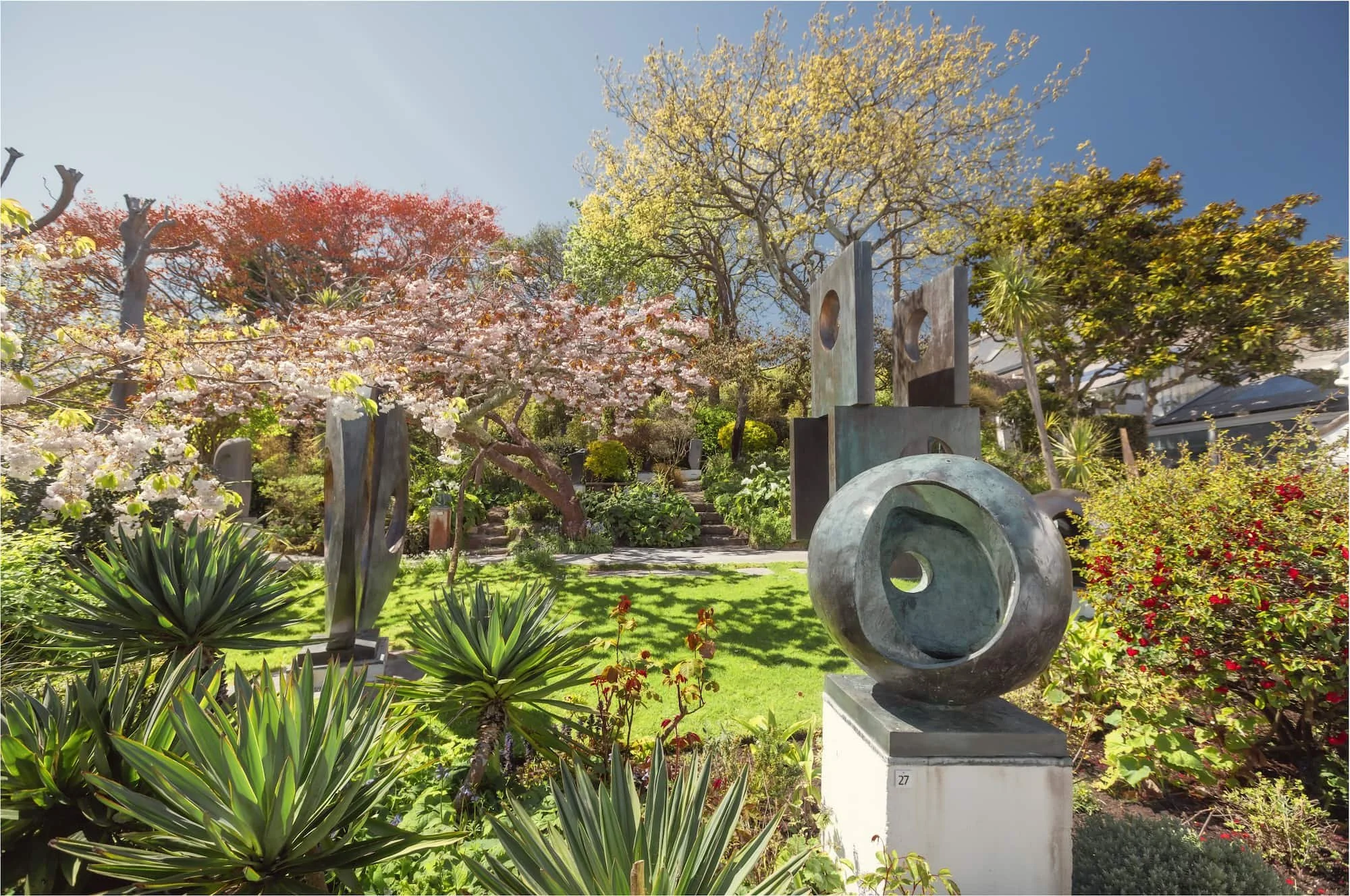
Photo copyright Kirstin Prisk
Jodi Dickinson MHort(RHS) is a professional horticulturist and head gardener at the Barbara Hepworth Museum and Sculpture Garden, St Ives. His RHS Master of Horticulture dissertation examined climate change adaptation strategies for public gardens in Cornwall. Juniper Gardens provides specialist garden maintenance, garden design and ecological garden care across mid and west Cornwall. View Jodi's full profile here.