
The Barbara Hepworth Museum and Sculpture Garden St Ives
Head Gardener at the Barbara Hepworth Sculpture Garden, Cornwall
Juniper Gardens has worked as Head Gardener at the Barbara Hepworth Museum and Sculpture Garden in St Ives, Cornwall for over a decade, collaborating closely with the Hepworth Estate and Tate St Ives to provide specialist horticultural expertise.
The garden has been open to the public for more than forty years and attracts thousands of visitors annually. It is, in the fullest sense, a community asset — a place where art, horticulture, and the particular quality of the St Ives landscape come together in ways that are genuinely irreplaceable. I explore the wider role that public gardens like this can play in their communities, and the responsibilities that come with it, in my article on how Cornwall's gardens can become pillars of community in a changing climate.
The principles demonstrated within this remarkable setting continue to inform the wider work of Juniper Gardens, a professional gardener in Cornwall, where planting, form and long-term stewardship are considered as one.
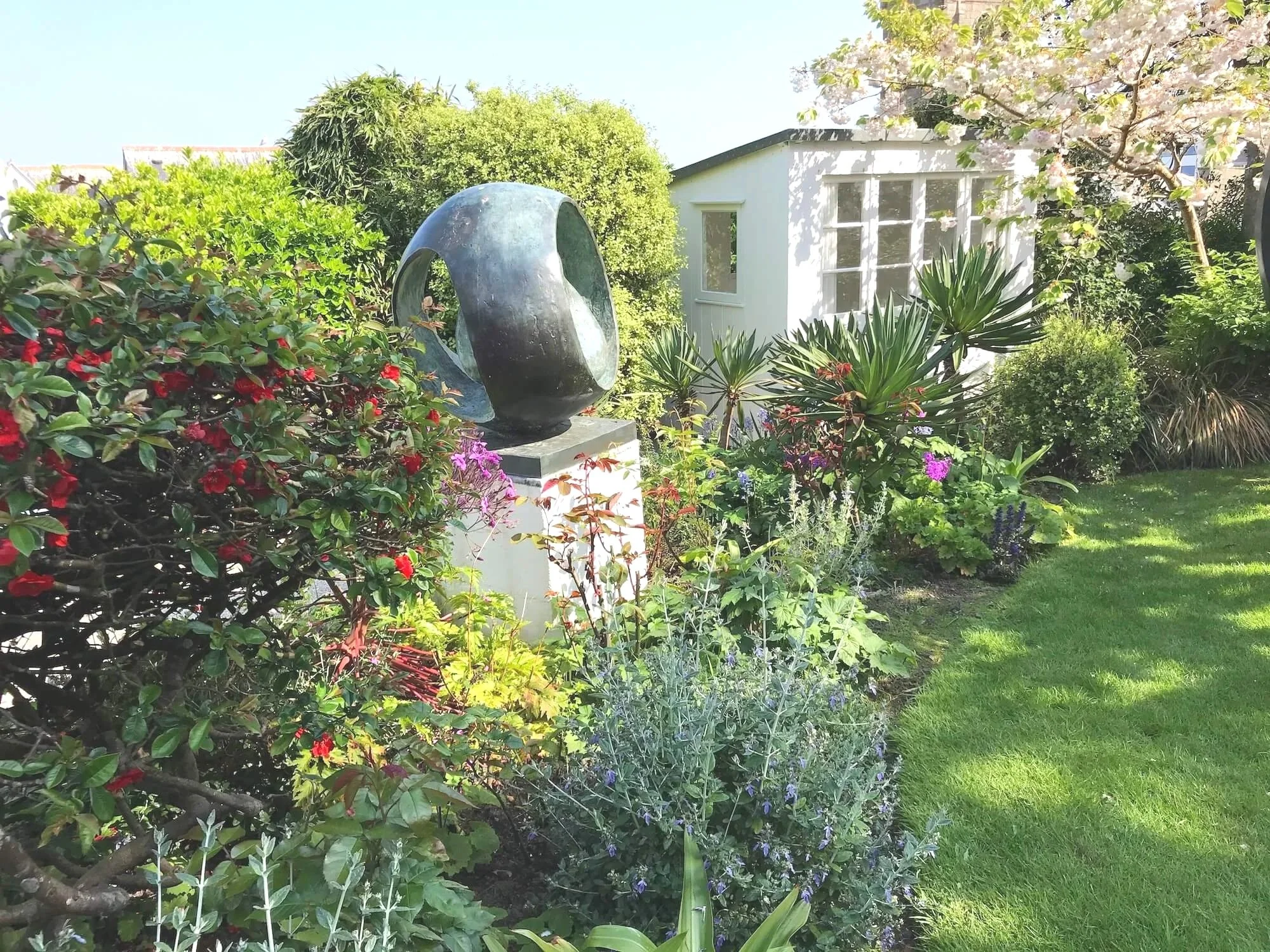
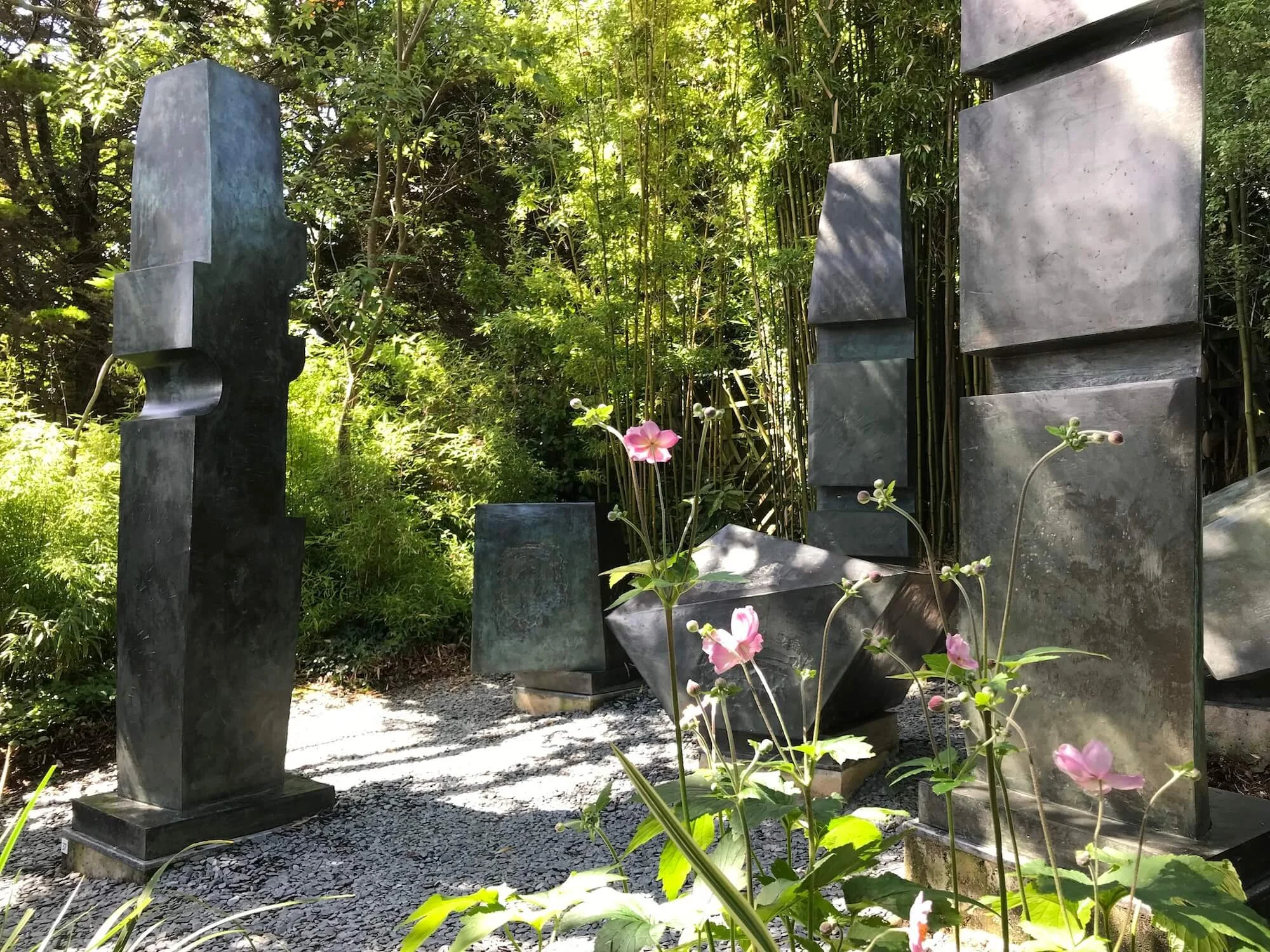
During Barbara Hepworth’s lifetime, the garden was both a private sanctuary and a working sculptural space. Hepworth expressed a clear wish that the garden should be preserved and opened to the public after her death. Today, sculptures remain positioned where she sited them, embedded within the trees, shrubs and planting she designed.
A central part of my work is maintaining this historical authenticity, using archival photographs and the memories of those who knew the garden during Hepworth’s lifetime. The aim is to preserve the original harmonies of form, foliage and atmosphere that she so carefully curated.
Barbara Hepworth’s Home and Garden
The tension between preserving what exists and adapting to what is coming is one of the central challenges of managing any historic garden. At the Hepworth garden, where authenticity is not simply a horticultural consideration but an artistic and cultural one, that tension is felt with particular intensity. I explore it in depth in my article on the preservation versus adaptation dilemma: how Cornwall's historic gardens can survive climate change.
“The continuity of life contains a tremendous and impelling force…” — Barbara Hepworth, 1959
This long-term public garden management informs my work in commercial gardening and grounds maintenance across Cornwall, where resilience, presentation, and ecological performance are essential.
Hepworth’s Ethos: Sustainability, Sense of Place and Climate Resilience
Today’s changing climate brings hotter, drier summers and increasing pressure from pests and diseases. To preserve the garden’s genius loci (sense of place), the planting and trees must be actively supported through ecological horticultural practices.
Regular additions of organic matter are used to build soil health, support soil ecology, and improve water-holding capacity. Soil organisms such as nematodes, springtails and earthworms underpin plant health and form the foundation for above-ground biodiversity. These wildlife-friendly gardening practices strengthen the resilience of the garden and reduce vulnerability to pests and disease.
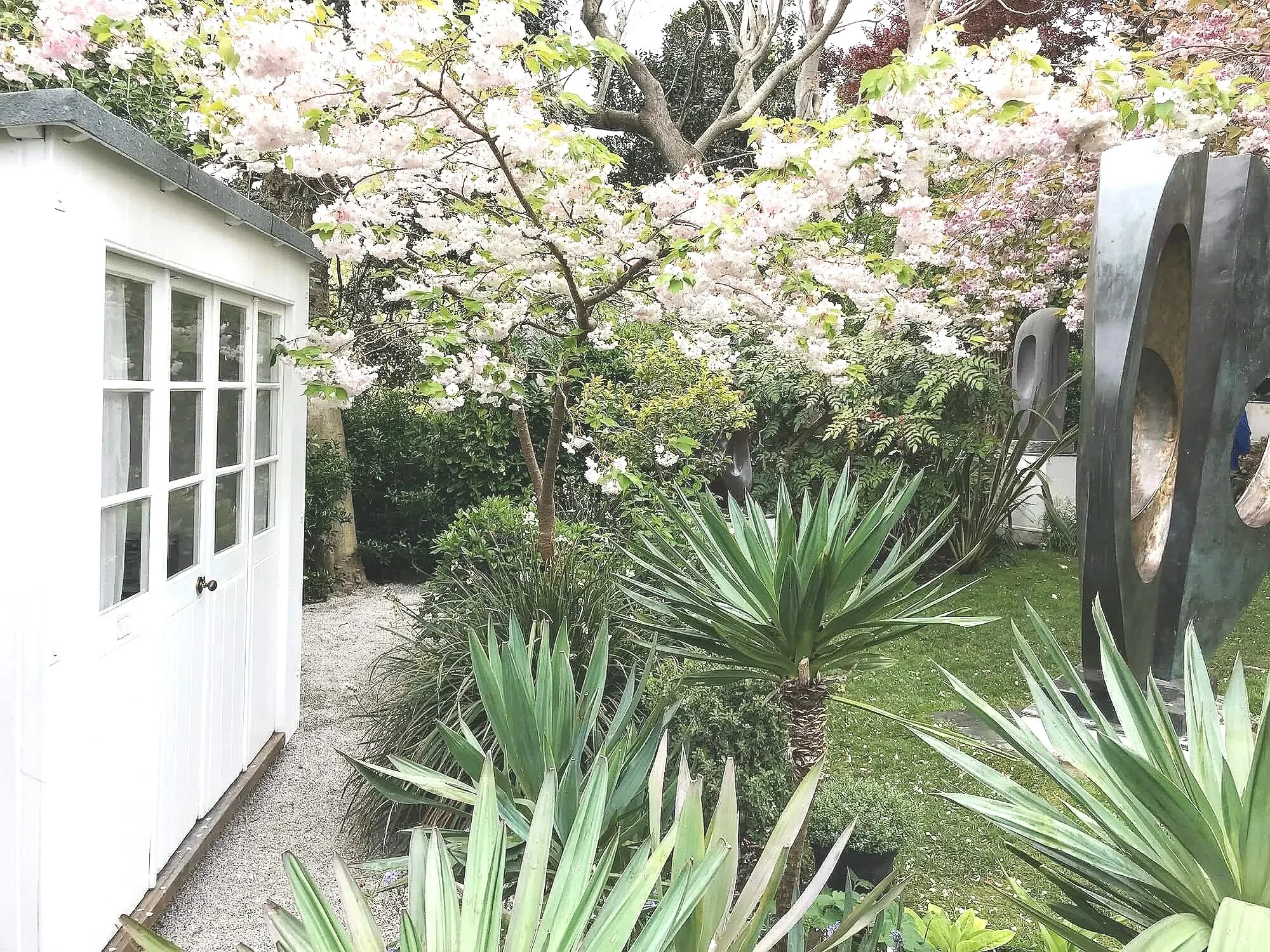
The plants most central to the garden's identity — the Prunus 'Accolade' cherry trees, the cinerarias, the mature Fagus sylvatica — are the ones that most need protecting during dry periods, and the ones whose loss would most profoundly alter the garden's character. Understanding which plants carry that weight, and why, is explored in my article on signature plants of Cornwall: what defines our gardens and how to protect them. The practical water management strategies I use to support these plants through increasingly dry summers are covered in my article on water-smart gardening in Cornwall.
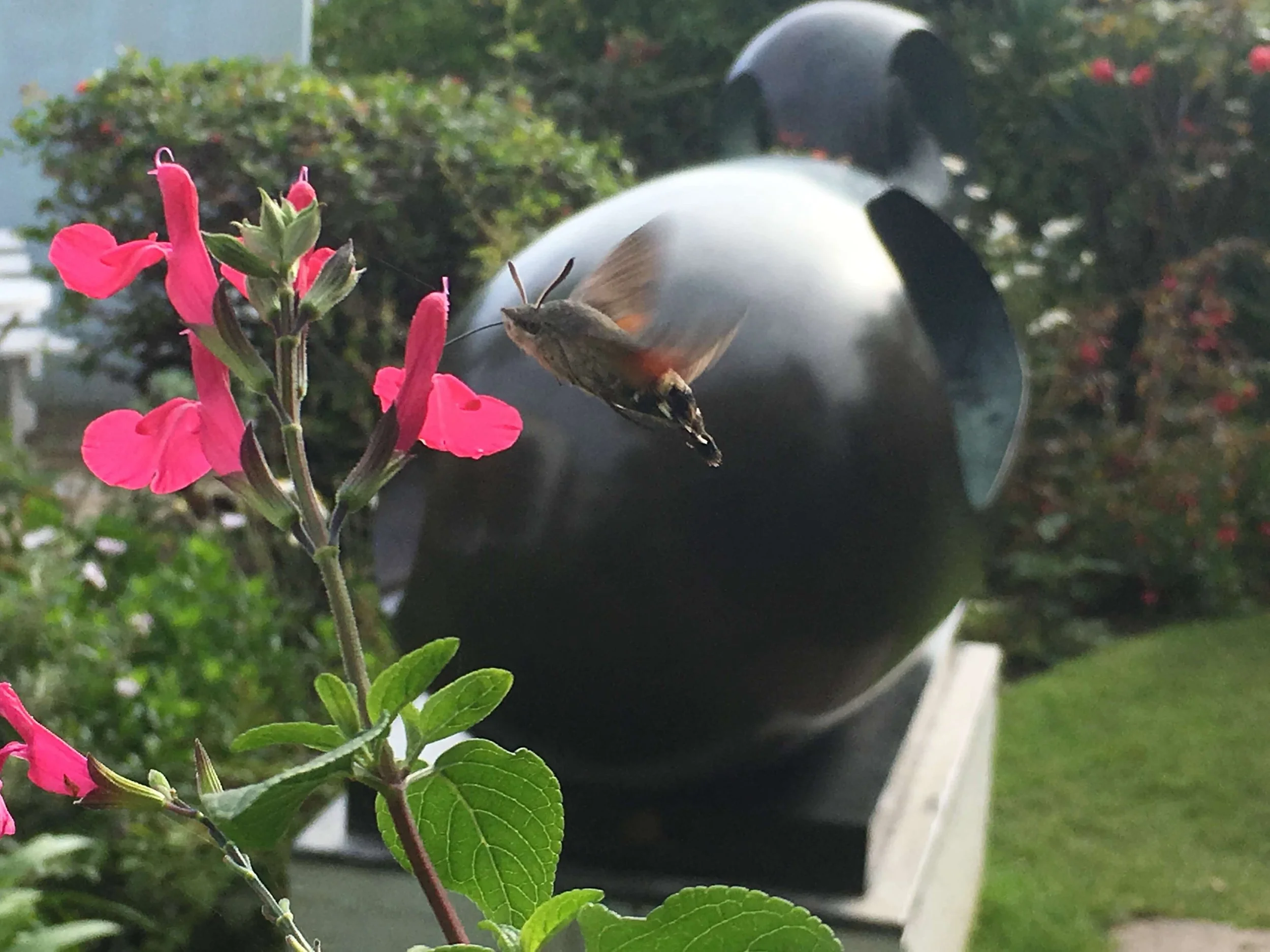
As an additional safeguard, discreet under-soil irrigation has been introduced in key areas to protect historic planting during prolonged drought.
Hepworth was deeply concerned about the environment and the legacy left to future generations. Her garden reflects these values, with a rich structural diversity that creates a mosaic of habitats. Mature trees provide nesting sites for birds, flowering plants support pollinators, and dense shrubs offer refuge for smaller species. In line with Hepworth’s ethos, the garden is managed with biodiversity and sustainability as core priorities.
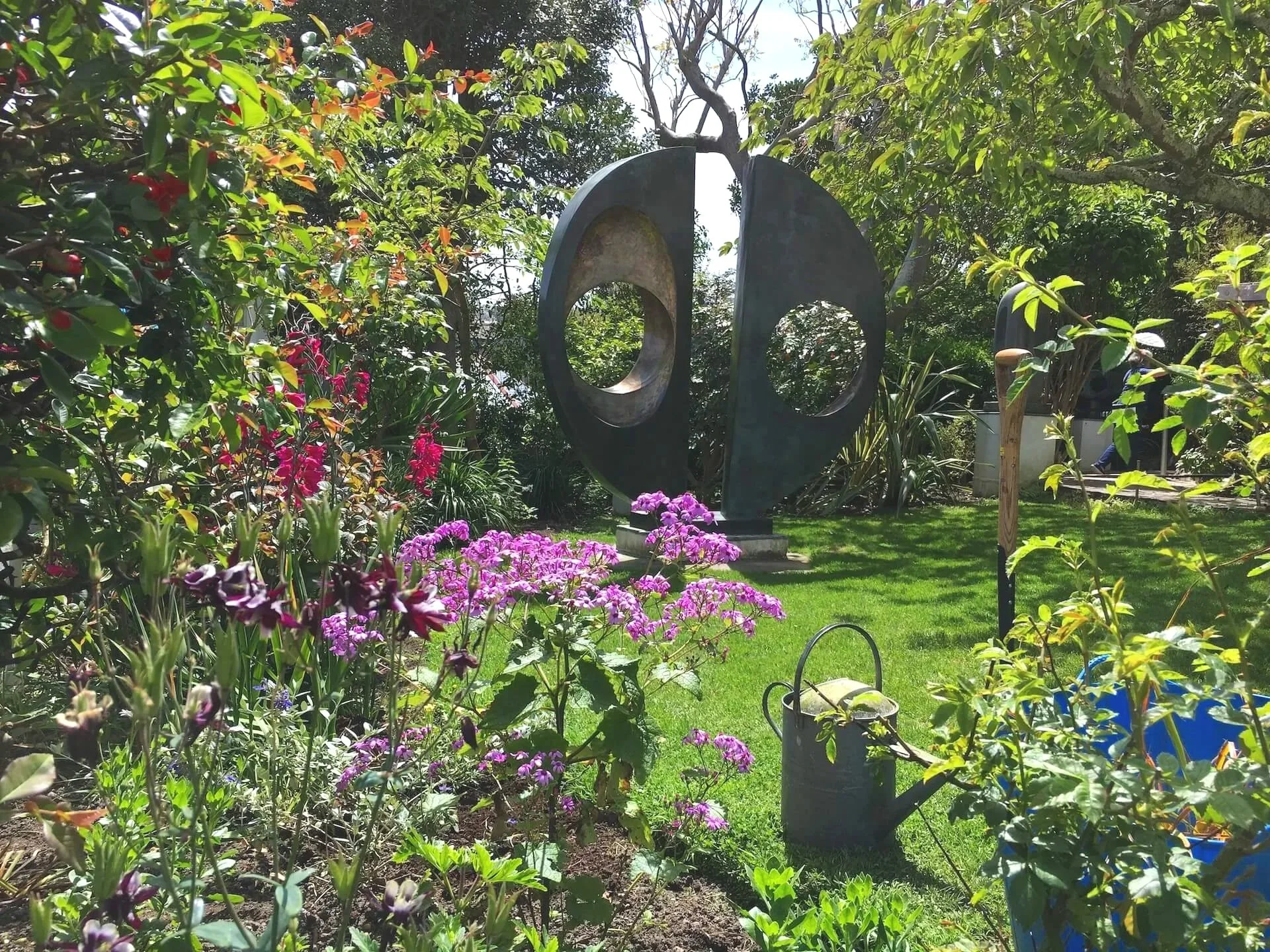
This connection between a garden and its broader community — between the values of the person who created it and the people who experience it today — is one of the things that makes the Hepworth garden so particular. Gardens managed with genuine ecological care and a long-term vision of sustainability can become windows through which visitors reconnect with the natural world in ways that are genuinely restorative. I explore the evidence for this in my article on well-designed outdoor spaces and human well-being: why Cornwall gets it right.
This living landscape also demonstrates many of the benefits of horticulture, from supporting mental wellbeing to enhancing biodiversity and climate resilience.
“[The continuity of life] contains a tremendous and impelling force. In autumn all the dynamics are laid for spring…. Spring is the manifestation of all that is laid down in the autumn. The artist who understands this is feeling his way to an understanding of the structures underlying these impulses”

Barbara Hepworth’s planting palette
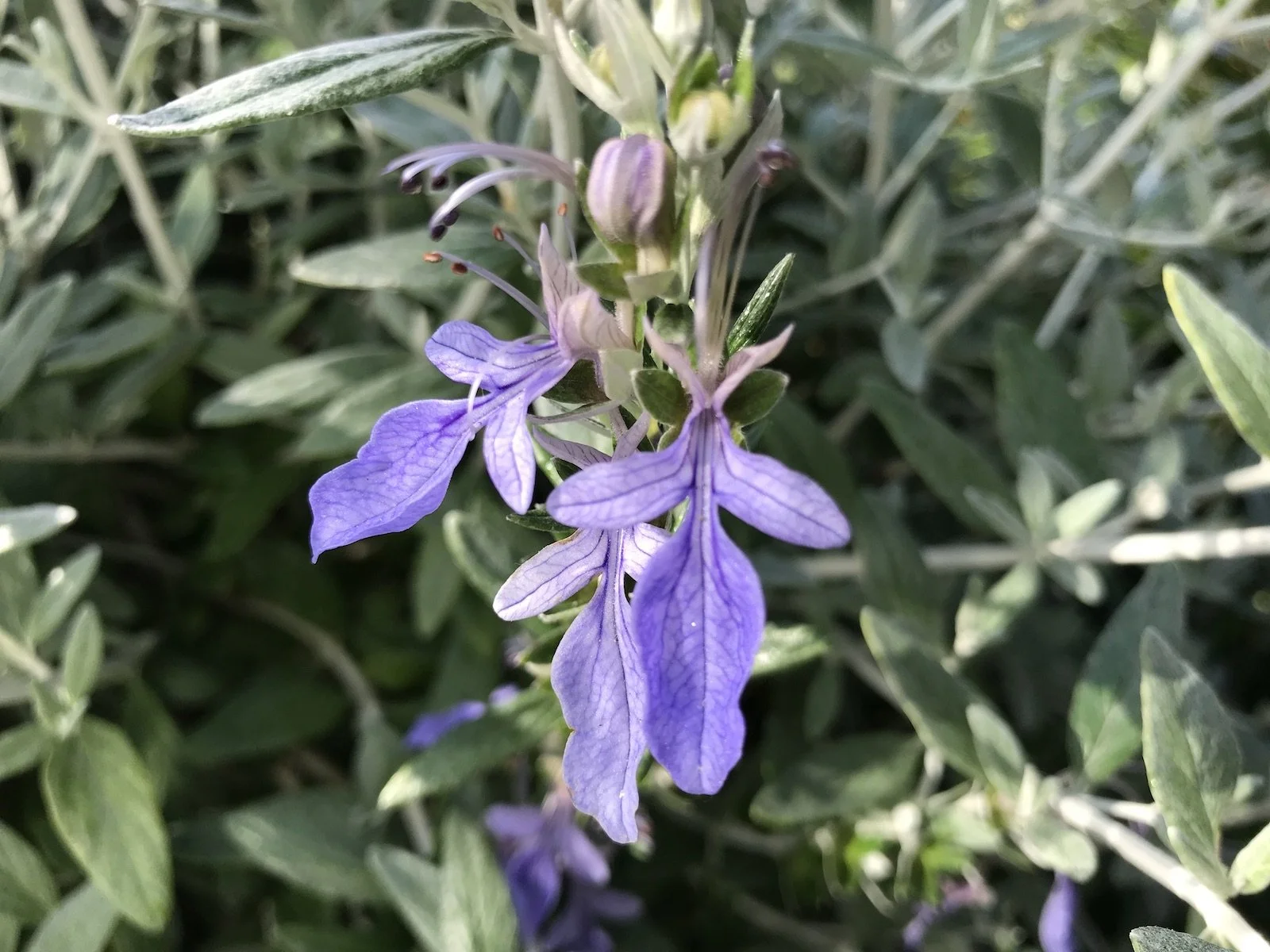
Hepworth worked with a restrained and contemplative planting palette, favouring muted tones with subtle accents in pink, purple and blue, often balanced with white. Texture and form—particularly evergreen structure—were central to creating the garden’s calm, reflective atmosphere.
Many of these principles also underpin my approach to garden and planting design for private landscapes.
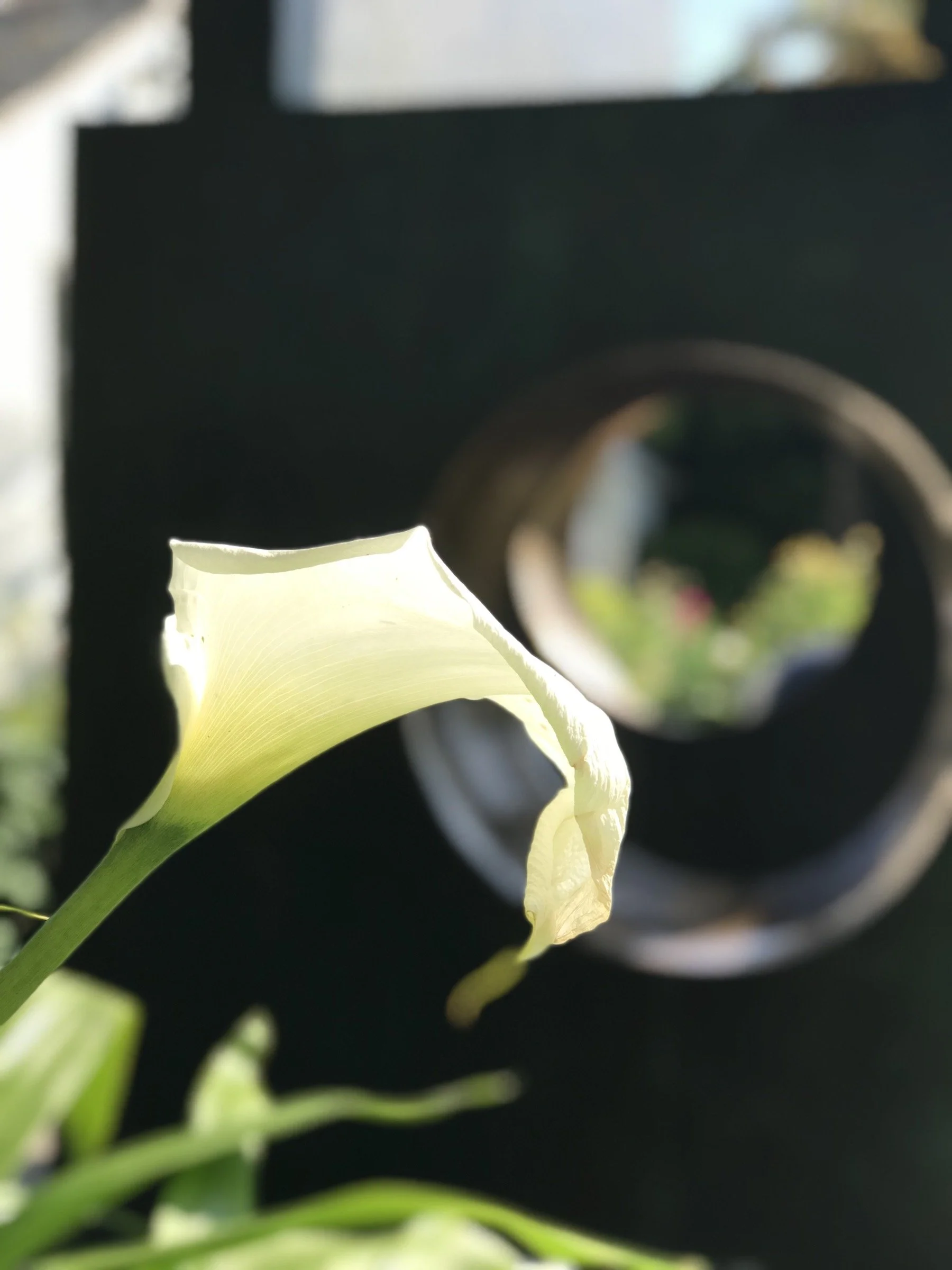
Reintroducing Lost Hepworth Plants
Over time, several original species disappeared from the garden. Archival photographs from the 1970s revealed the importance of cineraria as a key colour and compositional element. Unfortunately, the original species was no longer commercially available.
Through local horticultural networks in St Ives, I located a surviving population in a private garden, collected seed with permission, and successfully reintroduced the plant to the museum garden. Today, cineraria self-seeds throughout the garden, restoring Hepworth’s original colour harmonies with shades of white, pink, purple, magenta and blue.
The reintroduction of the cineraria illustrates something important about what it means to care for a historic garden well — that it sometimes requires going beyond routine maintenance into genuine horticultural detective work, building relationships with local communities and networks, and making decisions informed by a deep understanding of what a place is actually for. It is exactly the kind of work I had in mind when writing about how Cornwall's gardens can become pillars of community in a changing climate— the garden not as a closed space managed by specialists, but as something woven into the life of the place around it.
Cineraria: A Signature Species
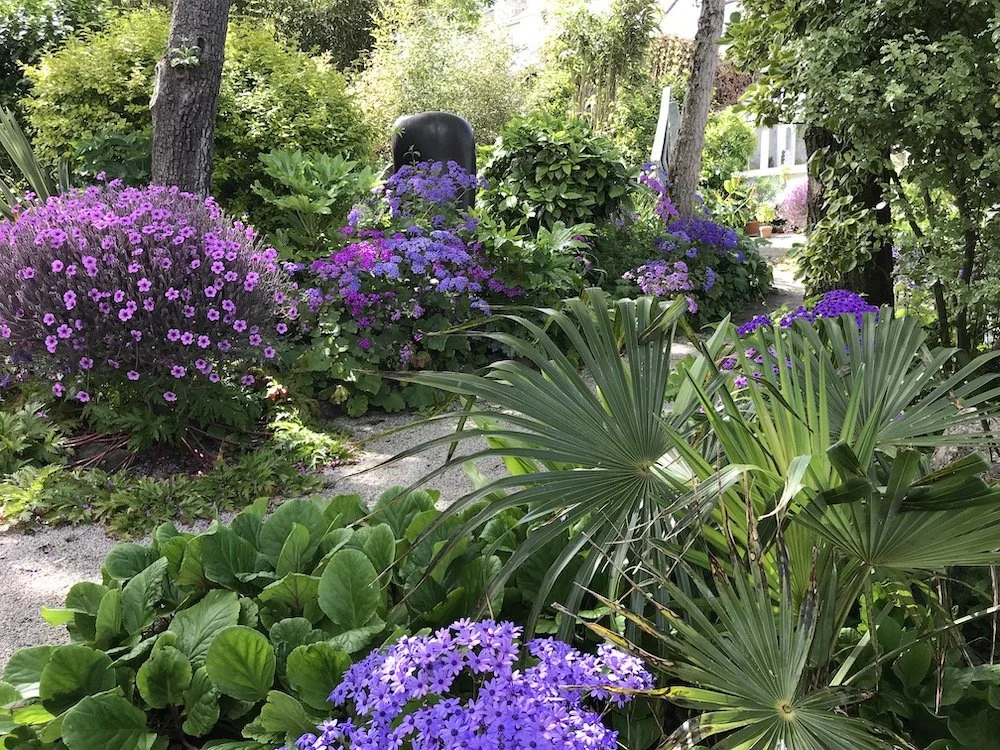
The cineraria is ideally suited to the woodland setting and maritime climate of St Ives and is now once again a defining feature of the sculpture garden. Alongside the cherry trees, it is a signature plant that strongly evokes Hepworth’s original vision.
The Barbara Hepworth Greenhouse
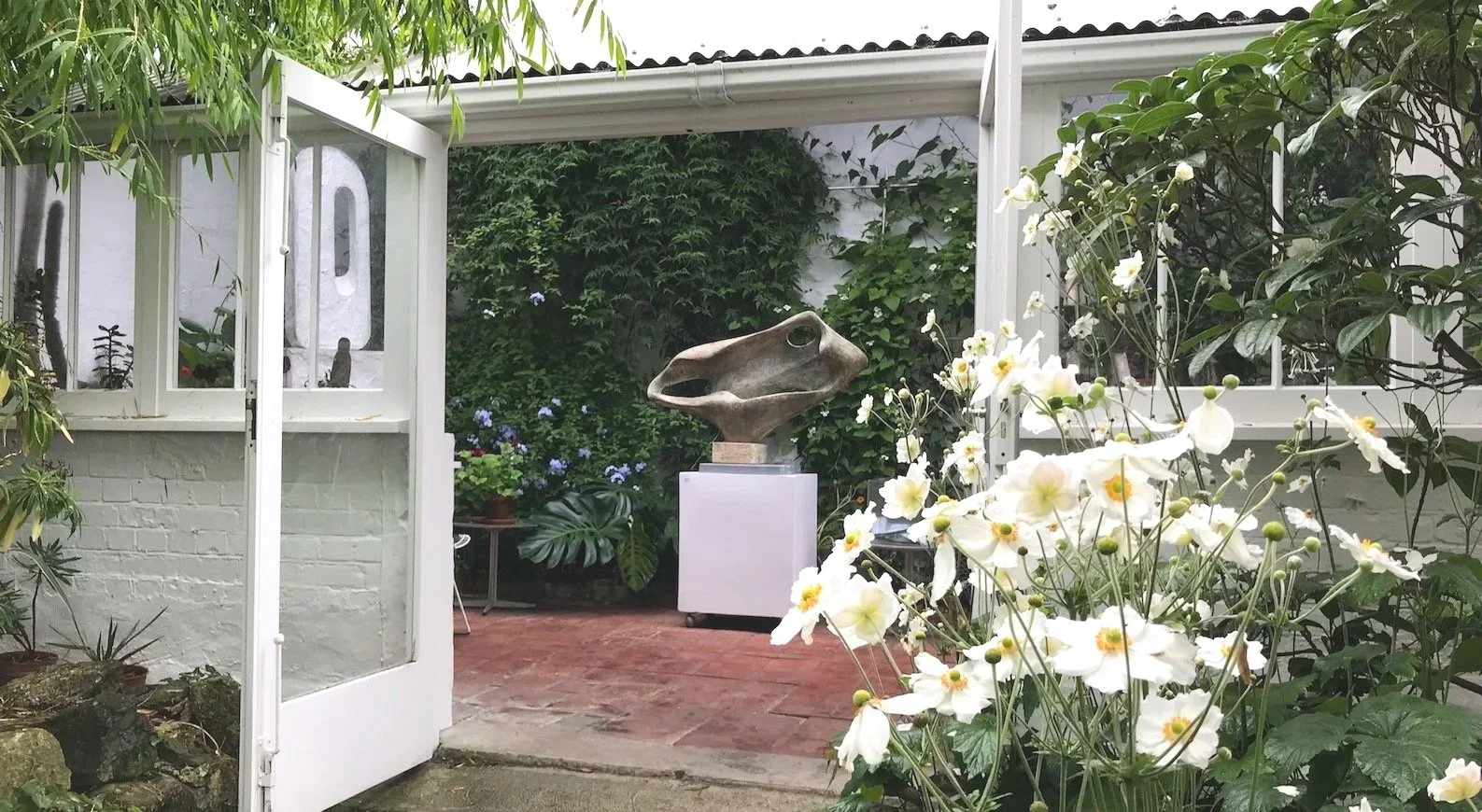
As Head Gardener, I also care for the plants in the Barbara Hepworth greenhouse, where Hepworth cultivated tender species such as plumbago, angel’s trumpet, and a collection of cacti and succulents. Many of these plants remain direct descendants of Hepworth’s original specimens, forming a living horticultural legacy. Further explore how working at the Barbara Hepworth garden has evolved my approach to artistic garden design here.
Frequently Asked Questions
Where is the Barbara Hepworth Sculpture Garden?
The Barbara Hepworth Museum and Sculpture Garden is located in St Ives, Cornwall, and is managed by Tate St Ives. The garden surrounds Hepworth’s former home and studio and is open to the public year-round.
Who maintains the Barbara Hepworth Sculpture Garden?
Juniper Gardens has worked as Head Gardener at the Barbara Hepworth Sculpture Garden for over a decade, collaborating with the Hepworth Estate and Tate St Ives to preserve the historic planting and garden structure.
What plants did Barbara Hepworth use in her garden?
Barbara Hepworth favoured a restrained planting palette with muted tones, evergreen structure, and subtle colour accents in pink, purple, blue and white. Signature species include cherry trees and cineraria, which have been reintroduced using archival research.
Is the Barbara Hepworth Garden wildlife friendly?
Yes. The garden has a diverse structure of trees, shrubs and flowering plants that provide habitats for birds, insects and other wildlife. Current management prioritises soil health, biodiversity and ecological resilience.
How does climate change affect the management of the Hepworth garden?
It creates an ongoing tension between preservation and adaptation — between maintaining the historical planting that defines the garden's character and responding to conditions that are changing around it. Drier summers, more intense rainfall events, and shifting pest and disease pressure all require active management strategies. I explore this challenge in depth in my article on how climate change is already affecting Cornish gardens, and the specific strategies I apply at the Hepworth garden and others like it in my article on the preservation versus adaptation dilemma.